Pankow stretches from the densely built Prenzlauer Berg to the detached-house estates in Buch and Französisch Buchholz. This enormous range of building types shapes the pipe problems in the borough: Prenzlauer Berg has the densest concentration of Gründerzeit period buildings in Europe – thousands of tenement houses from the 1890s to 1910s with original cast-iron pipe systems. In Niederschönhausen and Alt-Pankow, villas and detached houses with garden plots stand alongside each other. In Weißensee, period buildings meet prefab tower blocks. The outskirts of Karow, Buch and Französisch Buchholz are characterised by new housing estates from the 1990s and 2000s as well as older detached houses.
The drinking water in Pankow comes predominantly from the Tegel waterworks according to Berliner Wasserbetriebe, with a hardness of 15.0 degrees German hardness, plus a share from the Friedrichshagen waterworks. Hard water accelerates limescale deposits in pipes – in the over 100-year-old cast-iron pipes of the Prenzlauer Berg period buildings, corrosion layers and limescale encrustations form that narrow the pipe diameter from DN 100 to sometimes DN 50 or less. In the village-like districts of Blankenburg and Heinersdorf, clay pipe systems remain that are particularly susceptible due to settlement and root intrusion.
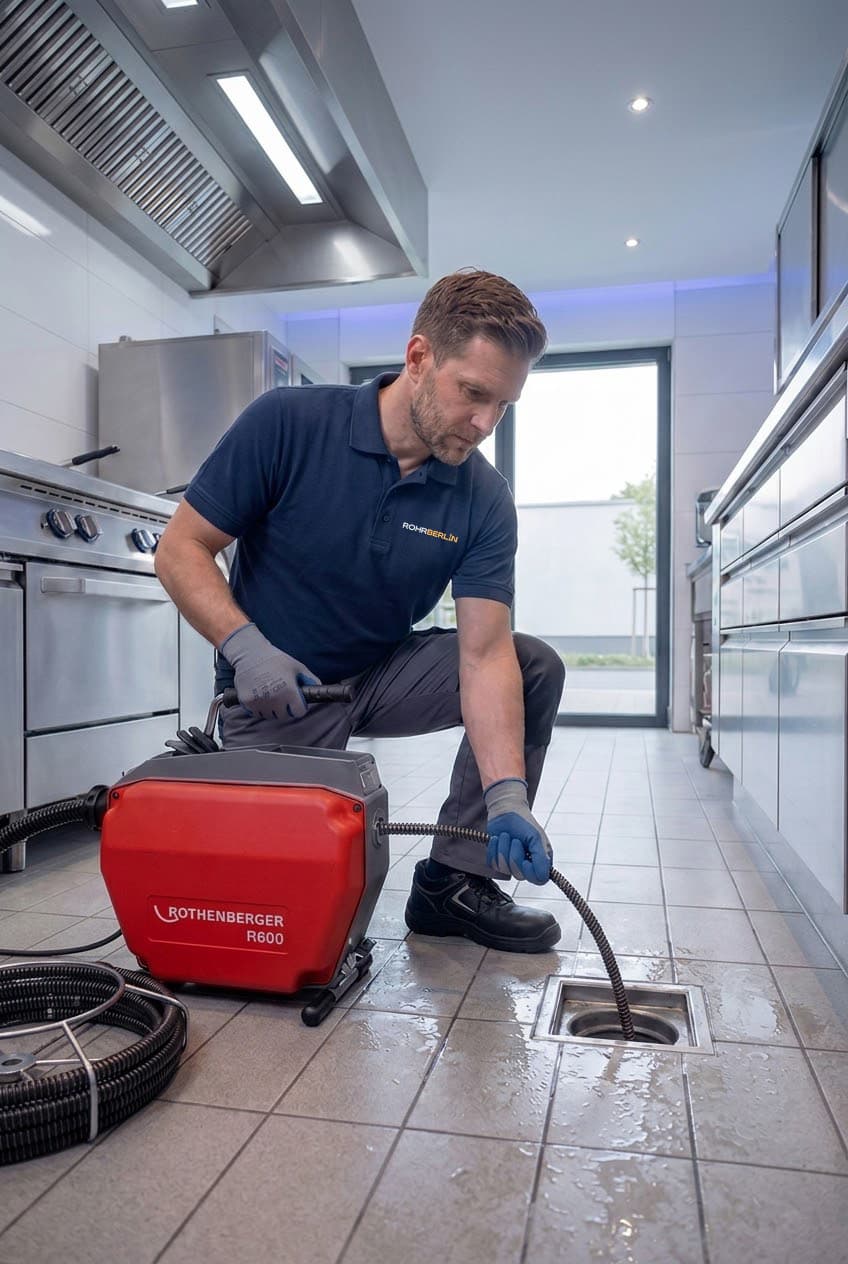
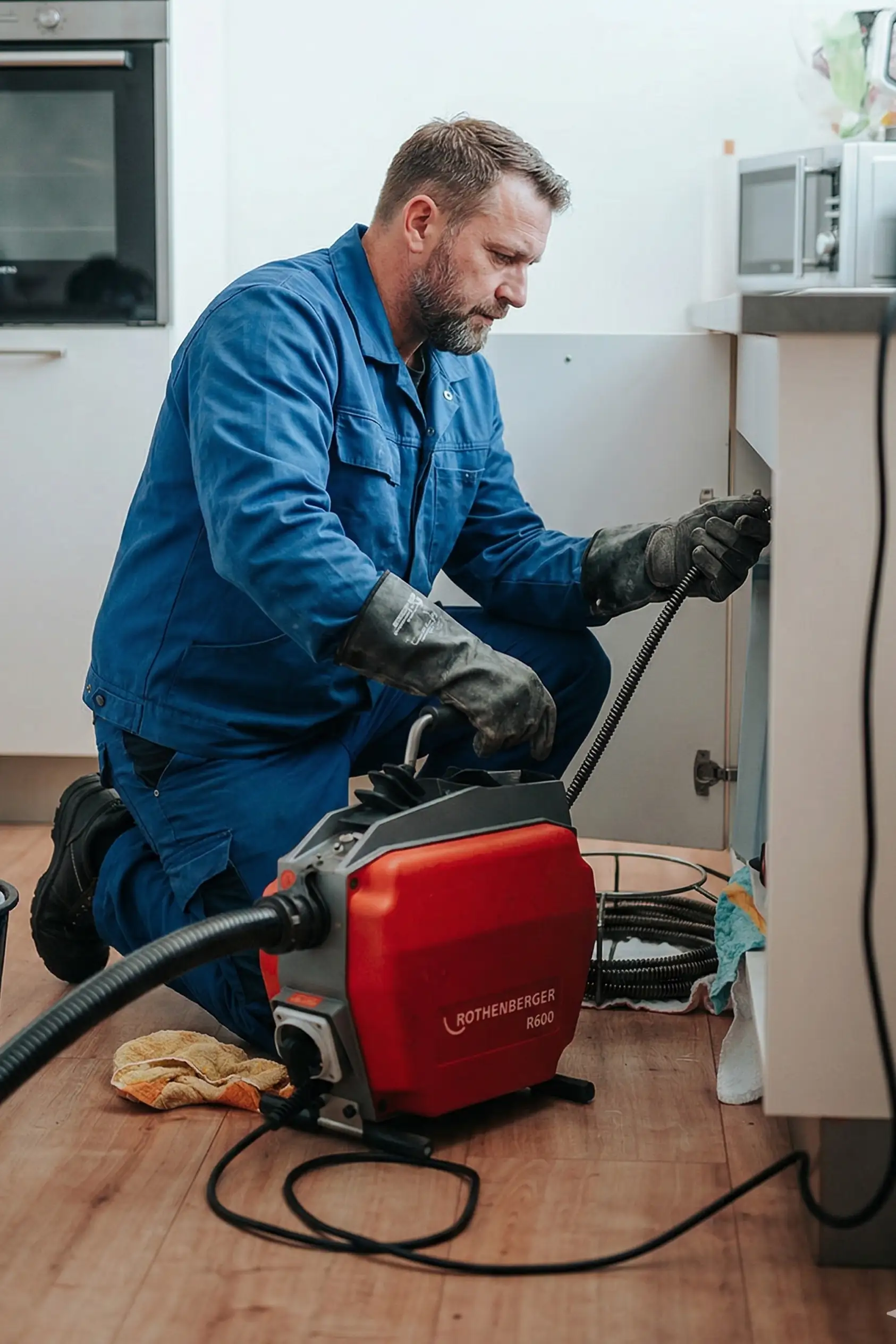
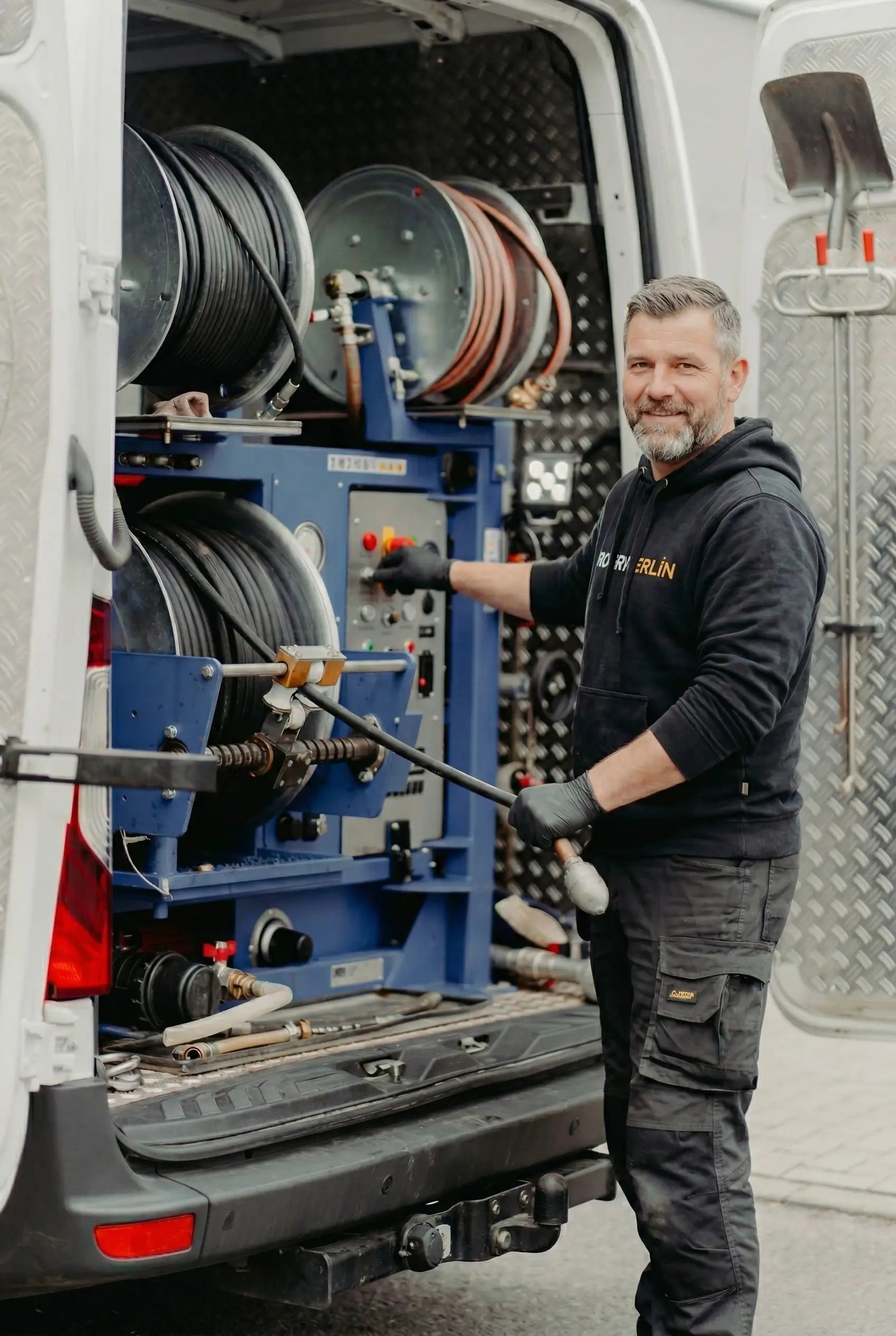
Whether you’re looking for a plumber or drain cleaner in Pankow – we’re your contact for blocked pipes, professional sewer cleaning and fast emergency help. Property managers with large Gründerzeit portfolios in Prenzlauer Berg and restaurant businesses along Kastanienallee and Schönhauser Allee benefit from our service with invoice billing and dedicated contacts.